By clicking “Accept All Cookies”, you agree to the storing of cookies on your device to enhance site navigation, analyze site usage and assist in our marketing efforts.
By clicking “Accept All Cookies”, you agree to the storing of cookies on your device to enhance site navigation, analyze site usage and assist in our marketing efforts.
How GenAI is Transforming Quality Control and Safety in the F&B Industry.
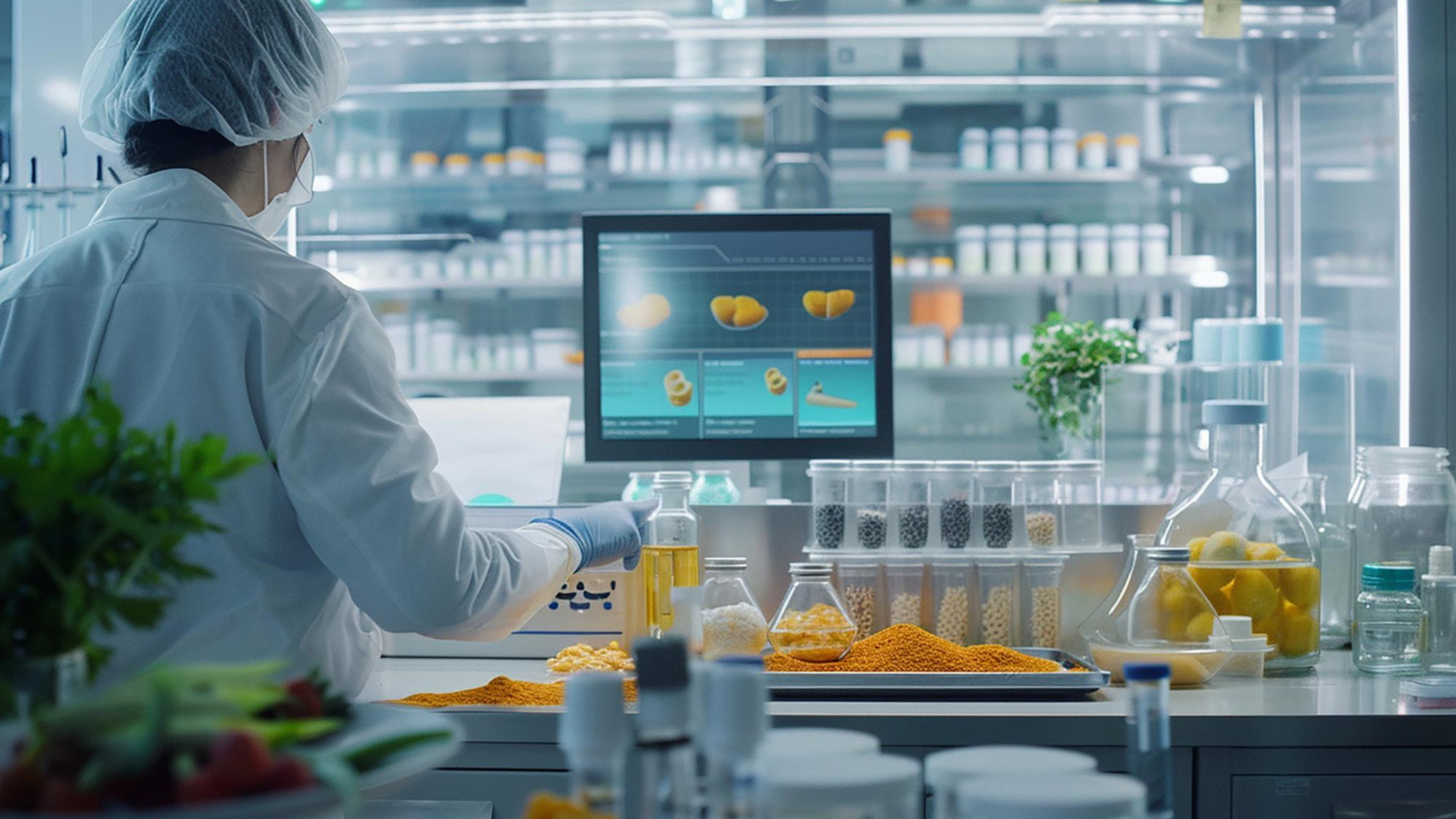
The food and beverage (F&B) sector is constantly under pressure to comply with strict food safety compliance while also ensuring that operations run efficiently. In light of rapid changes in consumer demand, policies, and supply chain management, there is an urgent need to utilize new technologies. Generative AI (GenAI), an area of artificial intelligence, is enhancing the automation of quality control processes, thereby increasing the safety and efficiency of the industry. In this article, we look into how GenAI is changing quality control and food safety using such technology as real-time monitoring, predictive analytics, and anomaly detection, paving the way for smart quality control.
Challenges in Quality Control and Food Safety
Food Safety and Quality Assurance form the core of the F&B sector. These businesses need to guarantee that their items are not tainted, are properly labeled, and fulfill global requirements. Some of the most common difficulties are as follows: Labor-Intensive Processes: The traditional approach is very labor-intensive, which poses a high risk of mistakes. Lack of Real-Time Insights: Delayed detection of contamination or irregularities can lead to massive recalls and reputational damage. Data Overload: The intricate nature of supply chains generates a significant amount of data, often at cross purposes, making it difficult to uncover crucial trends or patterns. Regulatory Compliance: Meeting food safety regulatory compliance obligations, which are constantly shifting, is often burdensome and laborious. These problems have created a situation where AI systems, especially GenAI, need to be integrated to improve and automate quality control systems.
The Role of GenAI in the Food and Beverage Service Industry
GenAI leverages machine learning algorithms to analyze vast datasets, generate insights, and automate tasks that were previously labor-intensive. Below are some key areas of using AI in food safety and quality assurance practices. 1. Focusing on compliance with food safety procedures Adherence to food safety regulations is a must. The application of GenAI in this sphere includes automated compliance verification tools of the Hazard Analysis and Critical Control Points (HACCP) and ISO 22000 standards.
Document Automation: With GenAI tools, businesses can generate or update all compliance-related documents automatically, thus cutting down on overhead costs.
Regulatory Updates: AI algorithms perform and analyze the news and changes related to regulations free of charge, making compliance simple for businesses.
Traceability: GenAI works with blockchain systems that allow the movement of a supply chain to be followed in real time, thus proving that every component used is safe.
2. Quality Assurance AutomationHuman involvement in quality assurance processes can result in slow and plentiful human errors. GenAI reduces this substantially as it automates the inspection process and enhances analytics for decision-making.
Image Analysis: Food items on spreading lines can be captured using cameras powered by GenAI, which will detect any flaws, such as a change in color or improper sealing or packaging of the item.
Workflow Optimization: AI machines can perform simple quality checks and save workers time and resources, allowing them to concentrate on essential tasks.
Personalized Solutions: GenAI is able to assess past data and propose a custom quality assurance plan for each product.
3. Food Safety Management- through efficient real-time monitoring.
Risk factors in manufacturing, storage, and transportation activities can be easily monitored through GenAI-powered IoT sensors and systems. These devices offer unprecedented visibility into operations.
Integration of IoT: Accurate sensor devices have the ability to track humidity, temperature, and even pressure levels and notify operators if an anomaly has been detected.
Continuous Auditing: AI systems continuously audit production processes to ensure they align with safety protocols.
Alert Mechanisms: Having real-time alerts greatly reduces the risk of contamination as alerts enable rapid response.
4. Predictive Analytics for Proactive Quality Control Predictive Analytics has revolutionized how issues related to food safety can be solved beforehand. GenAI warns about possible risks before they take place by studying both past and present data.
Shelf-Life Prediction: AI models forecast the shelf life of products based on storage conditions, reducing waste and ensuring safety.
Scheduling For Maintenance: Predictive algorithms recognize which equipment is at risk of failing and allow for much-needed repairs to be done before the equipment becomes unusable.
Supply Chain Insights: GenAI predicts disruptions in supply chains, enabling companies to mitigate risks proactively.
5. Anomaly Detection in Food Production Operations Detecting anomalies in production is crucial to maintaining high standards. GenAI’s ability to analyze vast datasets ensures quick identification of irregularities.
Contaminant Detection: By monitoring the system, Artificial Intelligence detects foreign objects, toxins, or pathogens, making sure the product is safe and up to standards.
Pattern Recognition: GenAI observes changes in production patterns that indicate issues.
Fraud Prevention: AI helps protect brand reputation by noticing discrepancies in labels and changes in ingredients.
Benefits of GenAI in the F&B Industry
Integrating GenAI into quality control and safety processes offers various advantages:
Improved Accuracy: Reducing human involvement while carrying out inspections ensures consistency in product quality.
Faster Response Times: With real-time alerts, companies can prevent expensive recalls by managing problems as soon as they arise.
Cost Efficiency: Through the minimization of waste and improving the allocation of resources, automation helps to cut down on business costs.
Scalability: AI systems easily adapt to increased production demands without compromising quality.
Consumer Trust: Consistently adhering to food safety regulations inspires trust among consumers and other stakeholders.
Challenges in Adopting GenAI
Despite the advantages of GenAI, its integration poses firm challenges for businesses. Companies need to address issues such as expenses, data protection, and skill shortages in the workforce to unlock its full potential.
High Initial Costs - The GenAI systems incur a hefty initial cost for the hardware, software, and setup. This proves to be a hassle for the small and medium-sized businesses.
Data Privacy and Security Concerns - GenAI systems operate on big data, which contains some very sensitive business and personal data, which is a data privacy issue. Companies must manage compliance with legal requirements such as GDPR and potential cyber threats such as data breaches or hacking.
Lack of Skilled Workforce - The effective use of GenAI requires expertise in AI, machine learning, and data analytics, but a shortage of skilled professionals in these areas often hampers successful adoption. Companies may need to invest heavily in training or hiring specialized talent, adding to implementation challenges.
Integration Complexity - Generative AI needs to seamlessly integrate with existing software and frameworks, and for that, it would require other components to be tweaked and altered, but doing that will come with its own set of issues, such as time delays and ROI disruption.
By addressing these challenges strategically, companies can unlock the full potential of GenAI while minimizing risks and barriers to adoption.
Conclusion
GenAI is transforming the F&B sector by reducing food safety violations, improving automation processes in quality assurance, and allowing for monitoring throughout the processing chain. Technologies such as predictive analytics and anomaly detection allow companies to take proactive measures to eliminate hazards, reduce waste, and gain the trust of consumers. As the sector progressively implements smart quality management, GenAI will be applied more broadly to enhance the safety, efficiency, and sustainability of food manufacturing and distribution. Harnessing GenAI technologies today enables F&B companies to secure their processes and remain relevant in the progressively changing world.