The organization needed to modernize a large legacy data environment made up of thousands of Oracle tables, historical data volumes, and Informatica workflows.
The migration effort involved multiple layers of complexity. Schema conversion, metadata migration, data movement, ETL modernization, and reconciliation all had to be completed without introducing operational disruption.
The process was too large and too effort heavy to handle manually.
The target architecture and migration objectives were already defined.
The issue was in how the migration could be delivered.
Each migration component required manual engineering effort across metadata extraction, schema conversion, ETL logic translation, data movement, and reconciliation.
Traditional migration approaches could support modernization, but they could not consistently:
As a result, incident handling remained slow and resource intensive.
The organization implemented DFast and DSuite to automate key migration and modernization tasks across the program.
The implementation was designed to:
The implementation introduced a coordinated workflow across triage, correlation, and resolution. Each ticket moved through a structured workflow with traceable actions and system level visibility.
Each migration component moved through a more structured and traceable modernization workflow.
The implementation ofDFastandDSuiteimproved delivery speed, reduced engineering effort, and accelerated modernization across the data estate.
The biggest shift was not just in processing speed. It was in how finance teams operated.
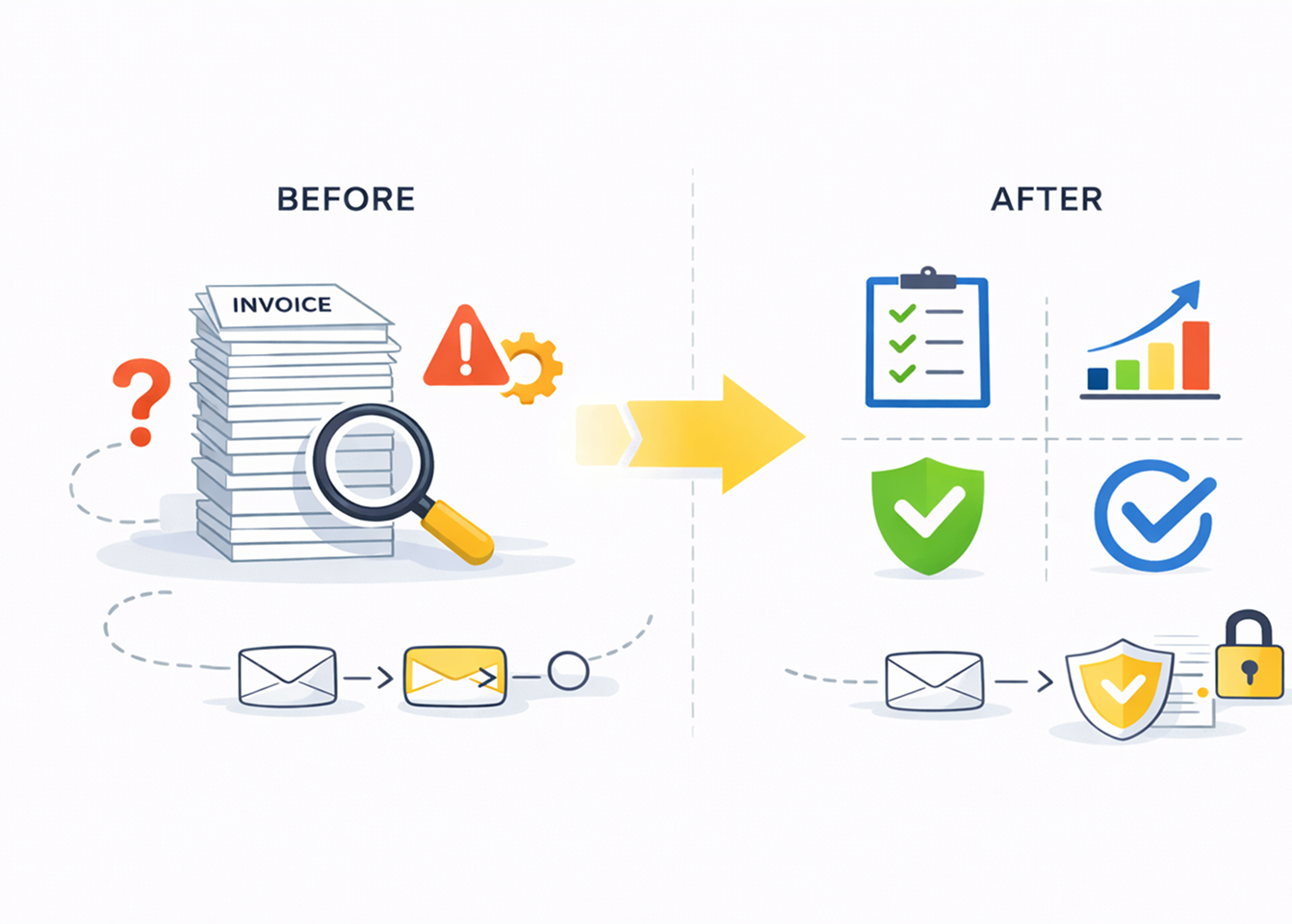
Before deployment, teams were spending time on repetitive handling, reconciliation, and exception chasing. After deployment, that work moved into a more governed workflow where invoice decisions were visible, traceable, and easier to control.
Finance teams were no longer buried inside the mechanics of invoice movement. They were positioned closer to where real value lives:

Before implementation, engineering teams had to handle migration tasks manually across schema conversion, ETL translation, data movement, and validation.
After deployment, the organization moved to a more integrated incident workflow where:
The implementation reduced engineering effort across the migration program while improving delivery control and modernization readiness.
Instead of relying on manual migration workflows, the organization moved to a more structured process for modernizing legacy data systems at scale.
The result was faster execution, lower migration risk, and a stronger foundation for cloud based analytics.