Terminal statements were received in inconsistent, non-standardized formats across terminals. Each document contained shipment and inventory data required for reconciliation, validation, and operational tracking.
The workflow relied heavily on manual extraction and comparison. Teams had to review terminal statements, extract values, compare them against shipment and inventory records, and resolve mismatches before workflows could proceed. This created delays in reconciliation, increased manual effort, and reduced visibility into where extraction and matching failures were occurring.
The documents were already available across terminal workflows. The issue was in what happened after receipt.
Each terminal statement had to be interpreted, structured, matched, and validated before teams could trust the data. Manual review and OCR-based approaches could extract text, but they could not consistently produce reconciliation-ready records.
Teams still had to resolve format inconsistencies, extraction mismatches across key fields, matching failures against shipment and inventory records, and delays in identifying where reconciliation was breaking.
As a result, issue resolution remained slow and reconciliation remained heavily manual.
The organization deployed the Terminal Statement Analyzer Agent to automate extraction, validation, and matching across incoming terminal documents. The implementation was designed to handle varying terminal statement formats, surface mismatches in real time, and maintain traceability across every processed document.
The implementation introduced a coordinated workflow across extraction, matching, operational visibility, and rule-based validation. Every document moved through a structured processing flow with traceable outputs and issue visibility.
Every document moved through a structured processing flow with traceable outputs and issue visibility.
The implementation of the Terminal Statement Analyzer Agent improved processing speed, data quality, and issue response across terminal workflows.
The biggest shift was not just in processing speed. It was in how finance teams operated.
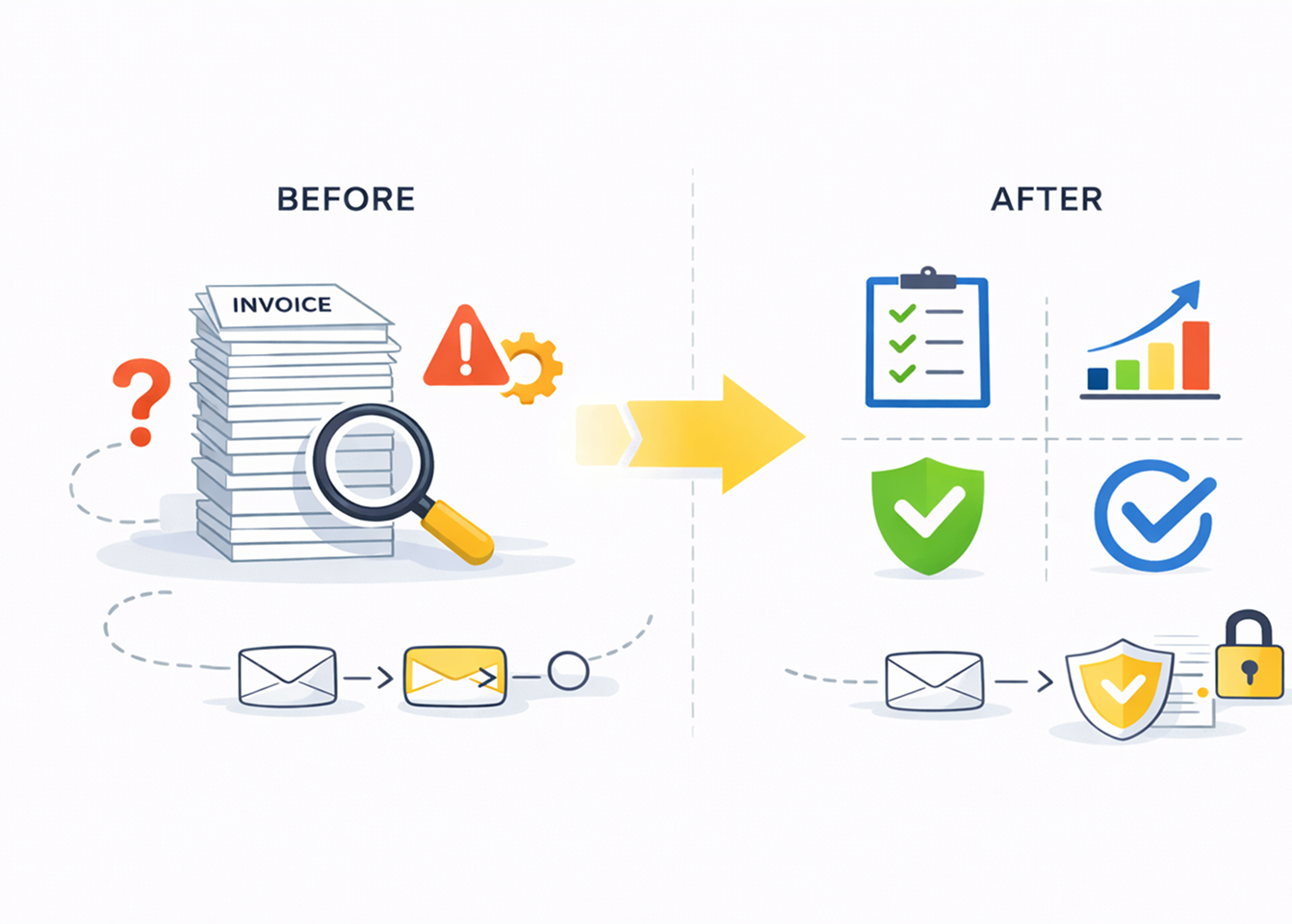
Before deployment, teams were spending time on repetitive handling, reconciliation, and exception chasing. After deployment, that work moved into a more governed workflow where invoice decisions were visible, traceable, and easier to control.
Finance teams were no longer buried inside the mechanics of invoice movement. They were positioned closer to where real value lives:

The most important shift was not just faster processing. It was a change in how reconciliation teams spent their time and how operational trust in terminal data was established.
Before implementation, terminal operations and reconciliation teams manually reviewed statements, validated extracted data, and investigated mismatches across fragmented systems. After deployment, processing became more structured and exception-driven.
After deployment, the organization moved to a more integrated reconciliation workflow where:
Terminal operations depend on accurate and timely reconciliation data. Delays in processing terminal statements can slow inventory management, create reporting gaps, and introduce compliance risks that compound across downstream workflows.
The organizations that perform better are not just the ones that receive terminal statements. They are the ones that convert those statements into reconciliation-ready operational data quickly and reliably.
The Terminal Statement Analyzer Agent enables that shift — allowing teams to move from manual document handling to structured, real-time terminal data processing at the scale that modern energy and commodities operations demand.