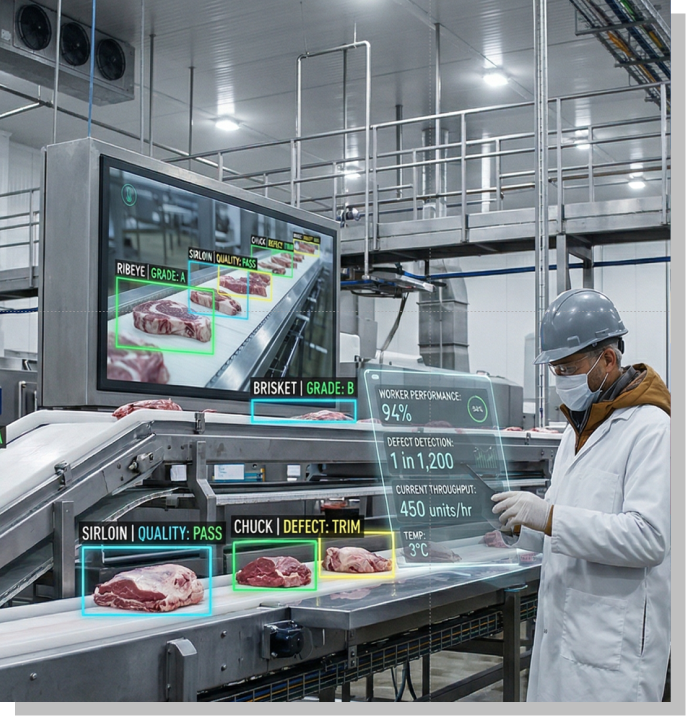
Quality inspection across the plant relied heavily on manual observation and review. Processed meat units had to be visually inspected, graded, and monitored by teams on the line.
The workflow lacked real time operational visibility.
Supervisors could not consistently track worker performance, associate quality outcomes with individual operators, or monitor inspection activity at scale.
This created inconsistency in quality checks, higher labour cost, and limited oversight across plant operations.
Inspection was already happening across the line.
The issue was in how consistently and efficiently it could be performed.
Manual inspection workflows could support quality review, but they could not reliably:
As a result, inspection remained labour intensive and difficult to monitor with consistency.
The organization deployed an agentic AI system to automate inspection, worker tracking, and operational monitoring across plant workflows.
The implementation was designed to:
This allowed inspection workflows to move from manual review into a more structured and measurable operating model.
The implementation introduced a coordinated workflow across quality inspection, worker monitoring, and plant visibility.
Each workflow was supported through a structured monitoring system with continuous visual input and measurable outputs.
The implementation of the AI driven inspection system improved defect detection, worker visibility, and inspection efficiency across plant operations.
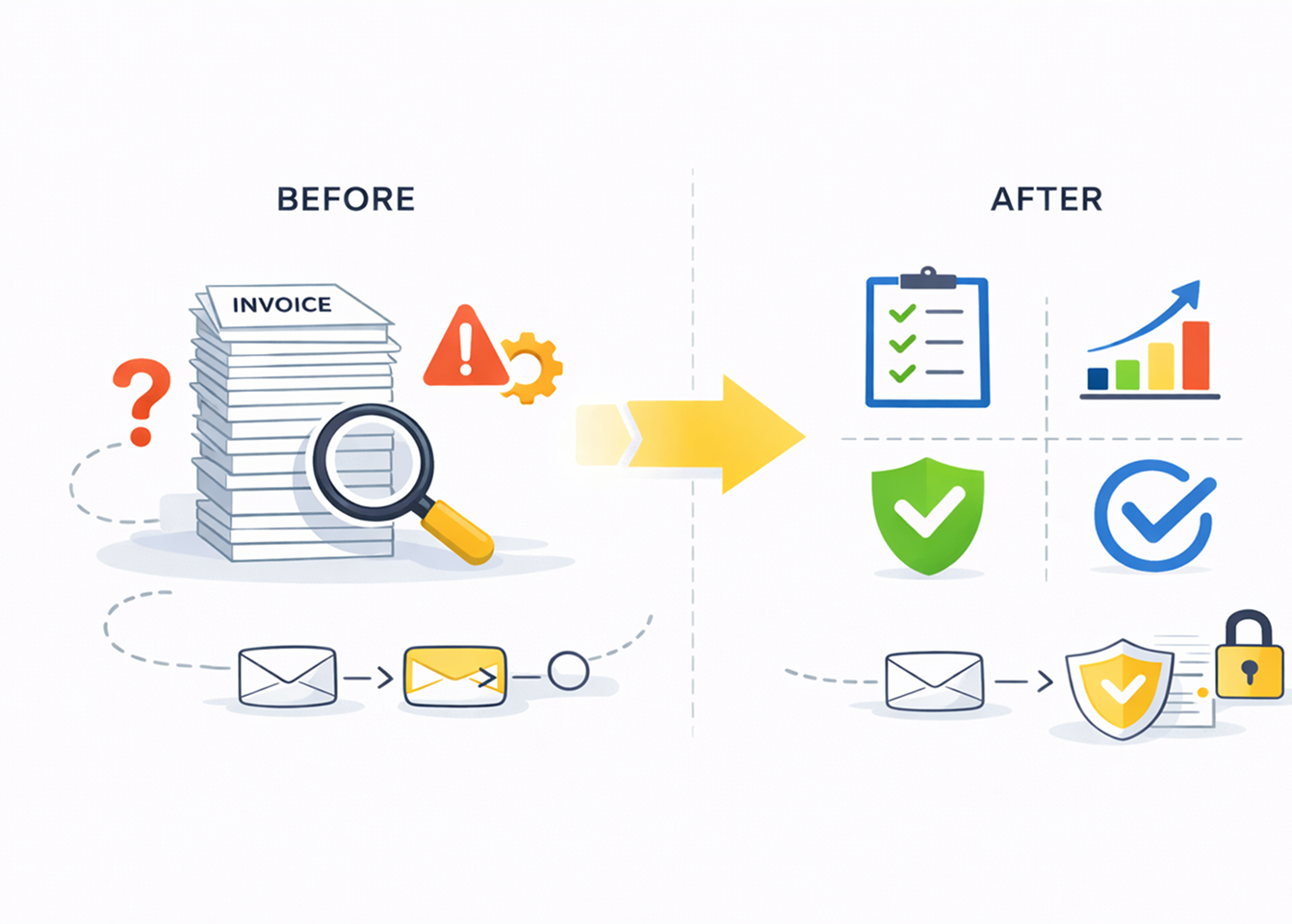
The biggest shift was not just in processing speed. It was in how finance teams operated.
Before deployment, teams were spending time on repetitive handling, reconciliation, and exception chasing. After deployment, that work moved into a more governed workflow where invoice decisions were visible, traceable, and easier to control.
Finance teams were no longer buried inside the mechanics of invoice movement. They were positioned closer to where real value lives:

Before implementation, plant teams relied on manual inspection and limited visibility into worker level performance and inspection consistency.
After deployment, quality monitoring became more structured and real time.
The implementation reduced manual inspection effort while improving defect detection and plant visibility.
Instead of relying on fragmented manual review, the organization moved to a more structured process for quality inspection and operational monitoring.
The result was stronger quality oversight, lower inspection cost, and better visibility across production workflows.