Enterprise Service Operations: Turning enterprise incident triage into a controlled operational system

Turning fragmented incident workflows into structured, intelligent resolution across IT operations

Manual incident triage and routing created delays, duplicate tickets, and inefficient use of resources. This case study shows how the Intelligent Incident Management Agent helped automate triage, improve resolution speed, reduce duplicate tickets, and streamline incident handling across systems.

CLIENT SNAPSHOT
Our Valued Client at a Glance

Industry

Enterprise IT Operations

Key Stakeholder

Incident Ticket Analyst / IT Incident Manager

Primary Challenge

Manual triage, routing, and resolution of high volume incident tickets

Operational Environment

Global incident management systems, ticketing platforms, and historical resolution repositories

THE CHALLENGE
Manual Incident Triage Created Delays And Inconsistent Resolution

Incident tickets were generated at high volumes across systems and required manual triage and assignment. Each ticket had to be reviewed, categorized, and routed to the appropriate team before resolution could begin.

The workflow depended heavily on manual analysis and historical knowledge. Teams had to identify patterns, correlate incidents, and determine resolution steps without structured support. This created delays in routing, increased duplicate tickets, and reduced efficiency in incident handling.

Manual

Incident triage and routing across all ticket types

High

Incident management operational effort

Duplicate

Tickets created across similar issues

Delayed

Resolution due to routing inefficiencies

Limited

Use of historical resolution data

Fragmented

Correlation of incidents at scale

WHY TRADITIONAL APPROACHES FELL SHORT
The Issue Was Not Ticket Generation. It Was Handling Them Efficiently.

Incidents were already being captured across systems. The issue was in how they were processed.

Each ticket required manual classification, routing, correlation, and resolution. While historical data existed, it was not effectively used to guide decisions. Manual workflows could support handling, but they could not correlate similar incidents at scale, leverage historical resolution patterns consistently, prevent duplicate ticket creation, or accelerate routing and resolution decisions.

As a result, incident handling remained slow and resource intensive.

THE SOLUTION
The Intelligent Incident Management Agent Introduced A Structured Triage And Resolution Workflow

The organization deployed an AI driven incident management system to automate triage, correlation, and resolution across incoming tickets. The implementation was designed to collect and triage incident tickets in real time, assign tickets to the appropriate teams automatically, identify correlations between incidents using historical data, auto-resolve incidents where resolution patterns exist, and reduce duplication while improving routing accuracy.

Real-time incident ticket triage and assignment based on context and priority.
Detects incident patterns by linking relationships using a knowledge graph and historical resolution data.
Automates resolutions using proven fixes, minimizing manual intervention across workflows.
Ensures full traceability with structured routing and system-level audit visibility.

HOW IT WORKED
How The Intelligent Incident Management Agent Worked In Practice

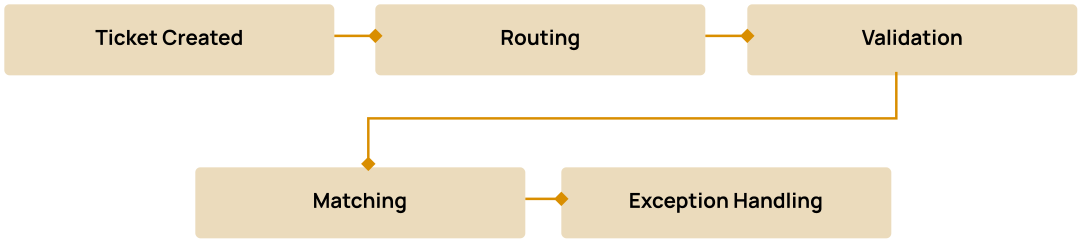
The implementation introduced a coordinated workflow across triage, correlation, and resolution. Each ticket moved through a structured workflow with traceable actions and system level visibility.

Incident Triage Agent

Collected and triaged incoming incident tickets in real time, assigning them to the correct groups based on context.

Network Analyzer Agent

Identified relationships between incidents using a knowledge graph and historical resolution data to detect similar patterns.

Automated Incident Resolver

Executed resolution actions based on previously successful fixes, reducing the need for manual intervention significantly.

Each incident moved through a structured workflow with traceable actions and system-level visibility.

RESULTS
From Manual Triage To Faster And More Efficient Incident Resolution

Processing Efficiency

5X

Faster Incident Resolution Rate

Improved

Routing And Triage Speed

Real-Time

Ticket Collection And Assignment

Accuracy And Quality

55%

Accuracy In Automated Resolution

Reduced

Manual Effort Across Workflows

Structured

Data-Driven Incident Handling

Control And Governance

30%

Reduction In Duplicate Tickets

Improved

Resource Allocation Efficiency

Traceable

Resolution Steps For Every Incident

WHAT CHANGED FOR FINANCE TEAMS
From Manual Routing To Structured Incident Handling

The biggest shift was not just in processing speed. It was in how finance teams operated.

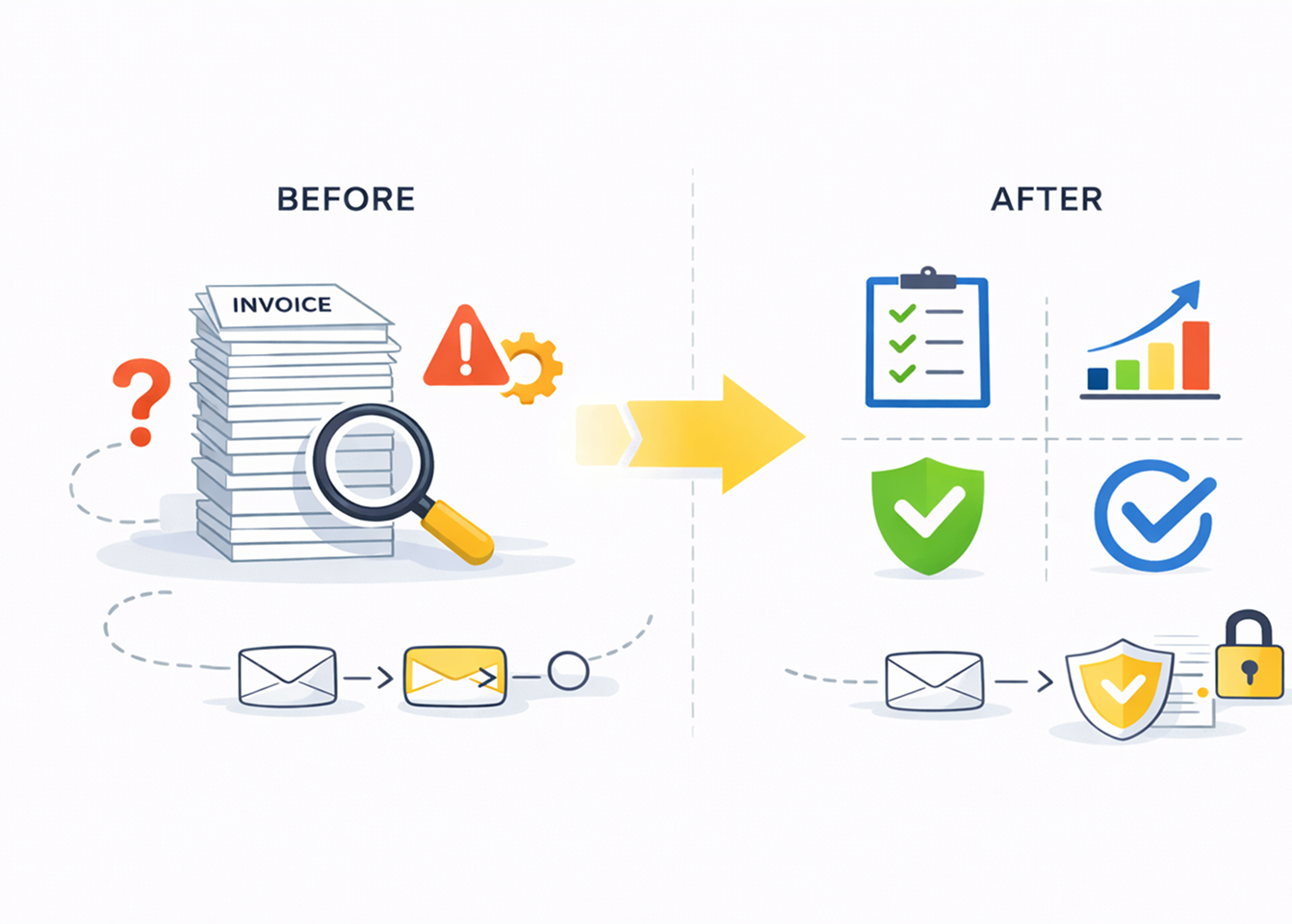
Before deployment, teams were spending time on repetitive handling, reconciliation, and exception chasing. After deployment, that work moved into a more governed workflow where invoice decisions were visible, traceable, and easier to control.

Finance teams were no longer buried inside the mechanics of invoice movement. They were positioned closer to where real value lives:

  • Reviewing meaningful exceptions
  • Maintaining financial control
  • Improving execution confidence
  • Reducing downstream disruption

The most important shift was not just faster resolution. It was a change in how IT operations teams spent their time and how confidence in incident handling was established across the organization.

Before implementation, teams manually triaged tickets, routed incidents, and relied on experience to resolve issues. After deployment, incident handling became more structured and data driven.

After deployment, the organization moved to a more integrated incident workflow where:

  • triage and routing were handled automatically based on ticket context
  • similar incidents were identified, grouped, and correlated by the system
  • resolution steps were executed based on known patterns from historical data
  • teams focused on exceptions and complex cases rather than repetitive manual work

WHY THIS MATTERS
Incident Handling Became Faster, More Consistent, And Easier To Scale

The implementation reduced manual effort across incident workflows while improving resolution speed and consistency. Instead of relying on fragmented manual processes, the organization moved to a more structured system for handling incidents at scale.

The organizations that perform better are not just the ones that capture incidents. They are the ones that triage, correlate, and resolve those incidents quickly, consistently, and at volume — without growing the manual effort required to do so.

The Intelligent Incident Management Agent enables that shift — allowing IT operations teams to move from reactive, manual ticket handling to structured, automated resolution at the pace and volume that modern enterprise operations demand. The result was faster resolution, lower operational cost, and improved efficiency across IT operations.

Turn Incident Tickets Into Structured Resolution Workflows

See How RandomTrees Helps Organizations Automate Incident Triage, Improve Resolution Speed, And Reduce Operational Effort Across IT Systems.