Pharmaceutical Supply Chain: Replacing pharmaceutical static planning with adaptive demand forecasting intelligence

Turning static inventory planning into more accurate, scenario-based demand forecasting

Reactive demand planning created forecast gaps, inventory inefficiencies, and avoidable stockout risk.

This case study shows how the Demand Planning Agent helped improve forecast accuracy, reduce stockouts, lower holding costs, and strengthen planning decisions through AI driven forecasting and scenario modelling.

CLIENT SNAPSHOT
Our Valued Client at a Glance

Industry

Pharmaceutical Supply Chain

Key Stakeholder

Supply Chain Planning Manager / Demand Forecasting Lead

Primary Challenge

Reactive demand forecasting with limited external factor integration and poor inventory predictability

Operational Environment

Demand planning, inventory forecasting, and supply chain decision workflows

THE CHALLENGE
Reactive demand planning created stockout and inventory risk

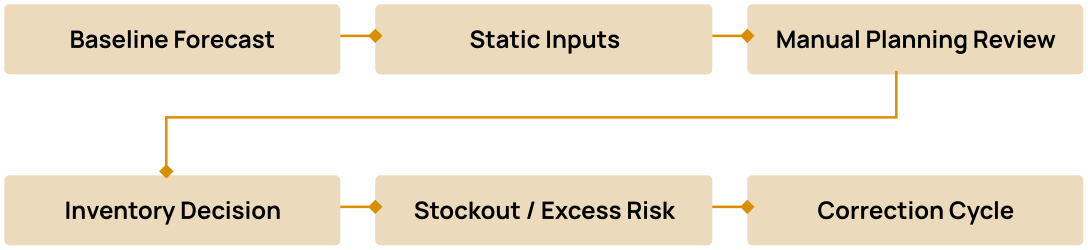
Forecasting workflows relied on static planning models and limited input variables.

Demand shifts were not being captured early enough to support more accurate inventory decisions.

The process lacked dynamic forecasting capability.
Planning teams had to work with incomplete signals, limited external data integration, and minimal scenario visibility when evaluating inventory requirements.

This created frequent stockouts, excess inventory exposure, and reduced confidence in forecast reliability.

Reactive

Demand forecasting process

Frequent

Inventory stockouts

High

Inventory holding costs

Limited

External data integration

Low

Forecast adaptability to demand shifts

WHY TRADITIONAL APPROACHES FELL SHORT
The issue was not generating forecasts. It was making them responsive enough

Forecasts were already being produced across planning workflows.

The issue was in how those forecasts were built.

Forecasting logic depended on static assumptions and limited variables, making it difficult to account for changing demand drivers and scenario shifts.

Traditional planning approaches could support baseline forecasting, but they could not consistently:

  • Incorporate external demand influencing factors
  • Detect meaningful patterns across planning variables
  • Generate dynamic forecast updates in real time
  • Simulate alternate demand scenarios for inventory decisions

As a result, planning remained reactive and inventory decisions remained exposed to forecast error.

THE SOLUTION
The Demand Planning Agent introduced a structured forecasting workflow

The organization deployed an AI driven Demand Planning Agent to improve forecast responsiveness, pattern detection, andscenario basedplanning.

The implementation was designed to:

Integrate internal and external variables into forecast workflows
Identify patterns and correlations across demand signals
Generate machine learning based demand forecasts
Simulate multiple demand scenarios for planning decisions
Improve inventory planning accuracy and responsiveness

This enabled demand planning to move from static forecasting into a more structured and adaptive forecasting workflow.

HOW IT WORKED
How the Demand Planning Agent worked in practice

The implementation introduced a coordinated workflow across demand intelligence, pattern analysis, forecasting, and scenario simulation.

Forecast Intelligence Agent

Integrated external and internal demand drivers, including planning relevant external factors, into the forecasting workflow.

Correlation and Trend Analysis Agent

Identified meaningful patterns and relationships across variables to improve forecasting inputs and planning accuracy.

ML Demand Forecasting Agent

Generated dynamic demand forecasts using machine learning models trained on demandbehaviorand historical patterns.

Scenario Simulation Agent

Created multiple demand scenarios to support better inventory planning and stocking decisions.

Each workflow was supported through a structured monitoring system with continuous visual input and measurable outputs.

RESULTS
From reactive planning to more accurate and controlled forecasting

The implementation of the Demand Planning Agent improved forecast quality, reduced inventory risk, and strengthened planning performance.

Forecast Performance

5%

Increase in forecast accuracy

Improved

Forecast responsivenessto demand variation

Inventory Outcomes

3%

Reduction in stockouts

2%

Reduction in inventoryholding costs

Planning Quality

Improved

Scenario based inventorydecision making

Better

Signal integration acrossforecast workflows

WHAT CHANGED FOR FINANCE TEAMS
From static planning to a more adaptive forecasting workflow

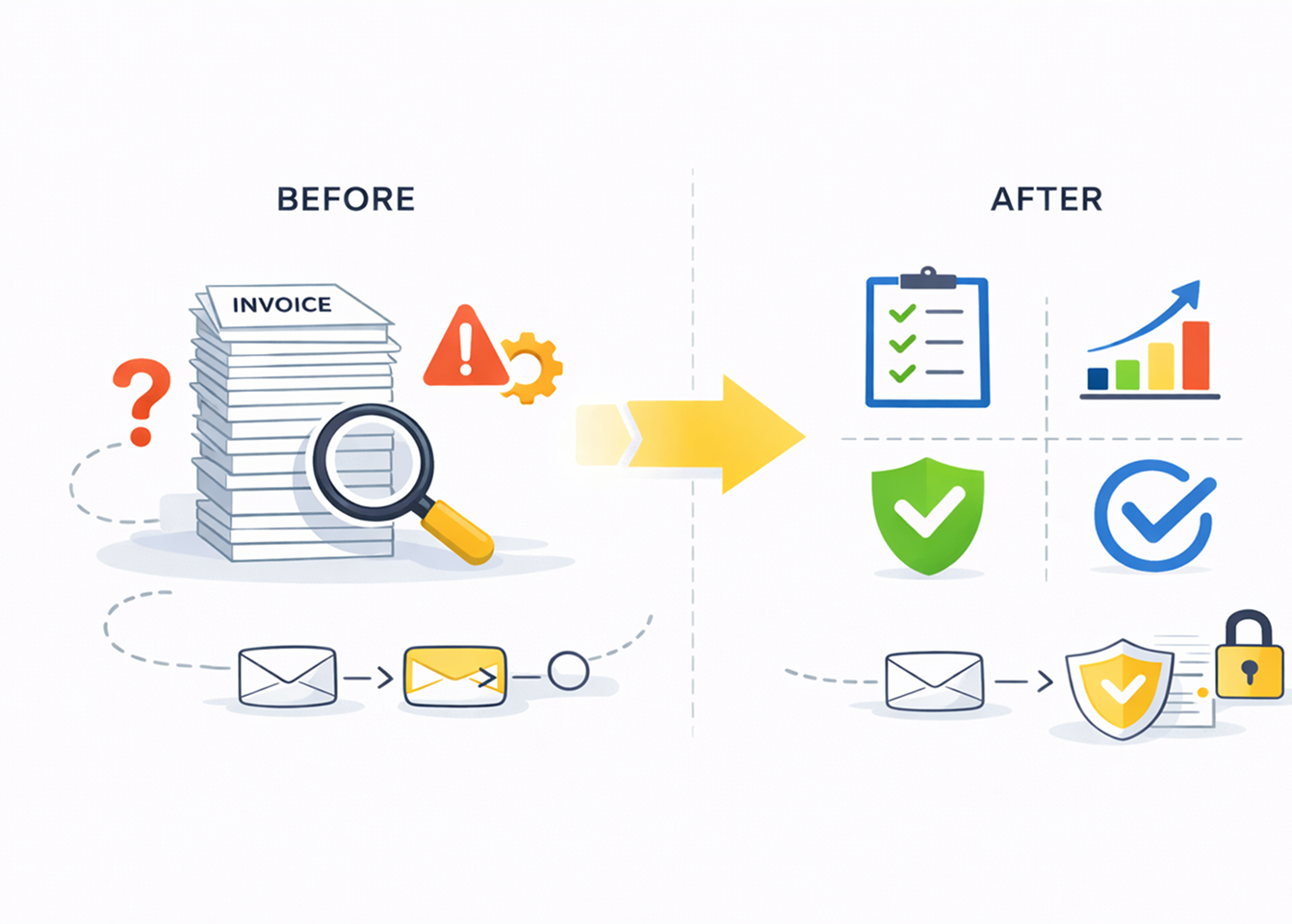
The biggest shift was not just in processing speed. It was in how finance teams operated.

Before deployment, teams were spending time on repetitive handling, reconciliation, and exception chasing. After deployment, that work moved into a more governed workflow where invoice decisions were visible, traceable, and easier to control.

Finance teams were no longer buried inside the mechanics of invoice movement. They were positioned closer to where real value lives:

  • Reviewing meaningful exceptions
  • Maintaining financial control
  • Improving execution confidence
  • Reducing downstream disruption

Before implementation, planning teams relied on static forecasting models and limited variables to make inventory decisions.

After deployment, forecasting became more dynamic and scenario driven.

  • Demand signals were integrated more effectively
  • Forecasts were generated with stronger pattern recognition
  • Planning teams had visibility into alternate demand outcomes
  • Inventory decisions were supported with more responsive forecast inputs

WHY THIS MATTERS
Demand planning became more accurate, more adaptive, and easier to act on

The implementation improved forecast quality while reducing planning friction across inventory workflows.

Instead of relying on static forecasts and delayed corrections, the organization moved to a more structured process for forecasting and demand driven inventory planning.

The result was better forecast reliability, fewer stockouts, and lower holding costs.

Turn demand signals into better inventory decisions

See howRandomTreeshelps organizations improve forecast accuracy, reduce stockouts, and strengthen planning workflows with AI driven demand intelligence.