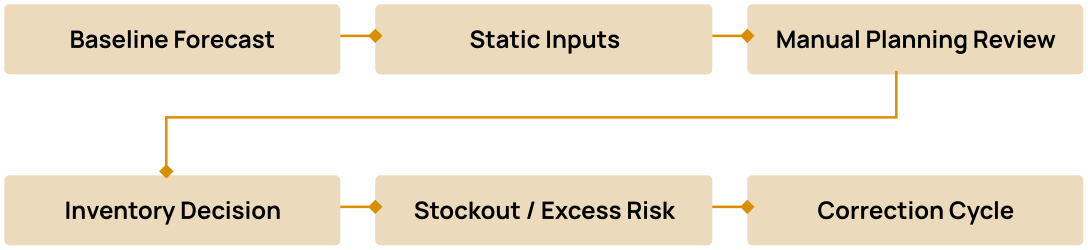
Customer understanding depended on fragmented data and manual interpretation. Profiling and segmentation workflows lacked the ability to continuously learn from structured and unstructured customer signals.
The process relied on static categorization and broad campaign assumptions. Teams had to interpret customer behavior, identify segments, and shape messaging without a structured system for surfacing deeper insights.
This reduced campaign precision, limited personalization, and weakened communication effectiveness.
Customer data was already available across systems and channels.
The issue was in how it was interpreted and applied.
Each campaign decision required teams to identify patterns, understand sentiment, define segments, and determine targeting strategy across disconnected inputs.
Manual workflows could support customer analysis, but they could not consistently:
As a result, profiling remained shallow and campaign targeting remained broad.
The organization deployed an AI driven customer intelligence system to automate insight generation, segmentation,
and targeting support.
The implementation was designed to:


%201.png)
This enabled customer intelligence to move from manual interpretation into a more structured and actionable insight workflow.
The implementation introduced a coordinated workflow across theme discovery, sentiment analysis, segmentation, and campaign personalization.


Each customer insight cycle moved through a more structured and continuously updated workflow.
The implementation of the Customer AI Insight Suite improved customer profiling quality, communication effectiveness, and campaign precision.
The biggest shift was not just in processing speed. It was in how finance teams operated.
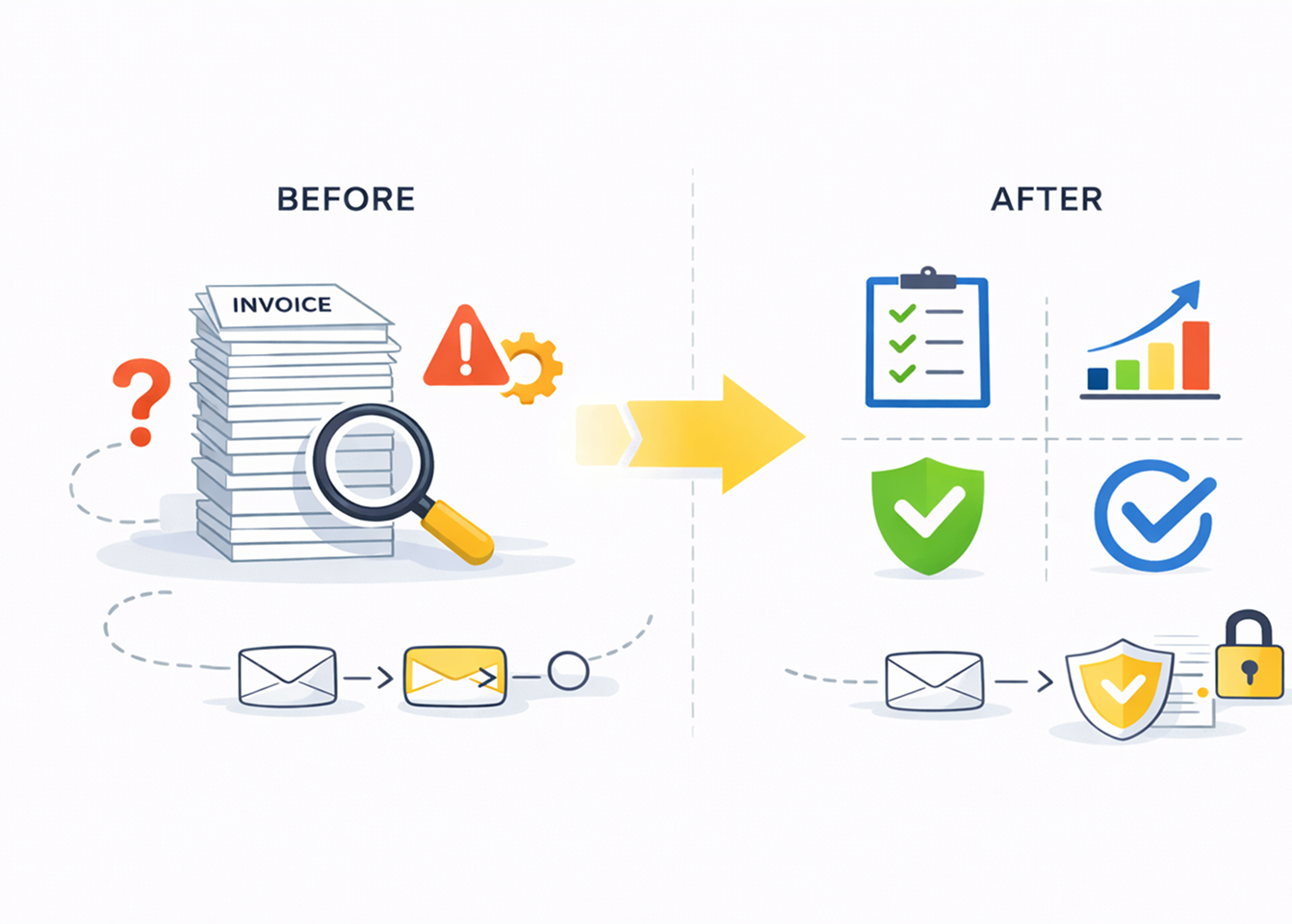
Before deployment, teams were spending time on repetitive handling, reconciliation, and exception chasing. After deployment, that work moved into a more governed workflow where invoice decisions were visible, traceable, and easier to control.
Finance teams were no longer buried inside the mechanics of invoice movement. They were positioned closer to where real value lives:

Before implementation, teams manually interpreted customer signals, created broad segments, and planned campaigns using limited context.
After deployment, customer intelligence became more structured and continuously updated.
The implementation improved the quality of customer profiling while strengthening segmentation and communication workflows.
Instead of relying on fragmented analysis and generic campaign logic, the organization moved to a more structured process for generating and applying customer insight.
The result was stronger targeting, more relevant communication, and better use of customer data across engagement workflows.