Autosys job failures required manual monitoring, identification, and resolution. Incidents were handled across multiple systems including Autosys, ServiceNow, and SOP repositories.
The workflow depended on manual intervention at every stage. Teams had to identify failed jobs, create or review tickets, locate relevant SOPs, and execute corrective actions. This created delays in resolution, increased manual effort, and reduced consistency in how incidents were handled.
Incidents were already being captured through monitoring systems and tickets. The issue was in how they were resolved.
Each failure required multiple steps across systems — identifying the issue, locating the correct SOP, and executing the resolution. Manual workflows could support resolution, but they could not standardize resolution steps, reduce dependency on manual intervention, ensure consistent SOP-based execution, or scale resolution across high failure volumes.
As a result, resolution remained slow, effort-heavy, and inconsistent.
The organization deployed an AI-driven incident management system to automate detection, analysis, and resolution across Autosys and ServiceNow workflows. The implementation was designed to monitor systems in real time, identify high-failure jobs, retrieve appropriate SOPs, and execute resolution steps automatically where applicable.
Each incident moved through a structured workflow with traceable resolution steps and system-level visibility.
The implementation of the Auto Incident Management Agent improved resolution speed, reduced manual effort, and increased consistency across incident workflows.
The biggest shift was not just in processing speed. It was in how finance teams operated.
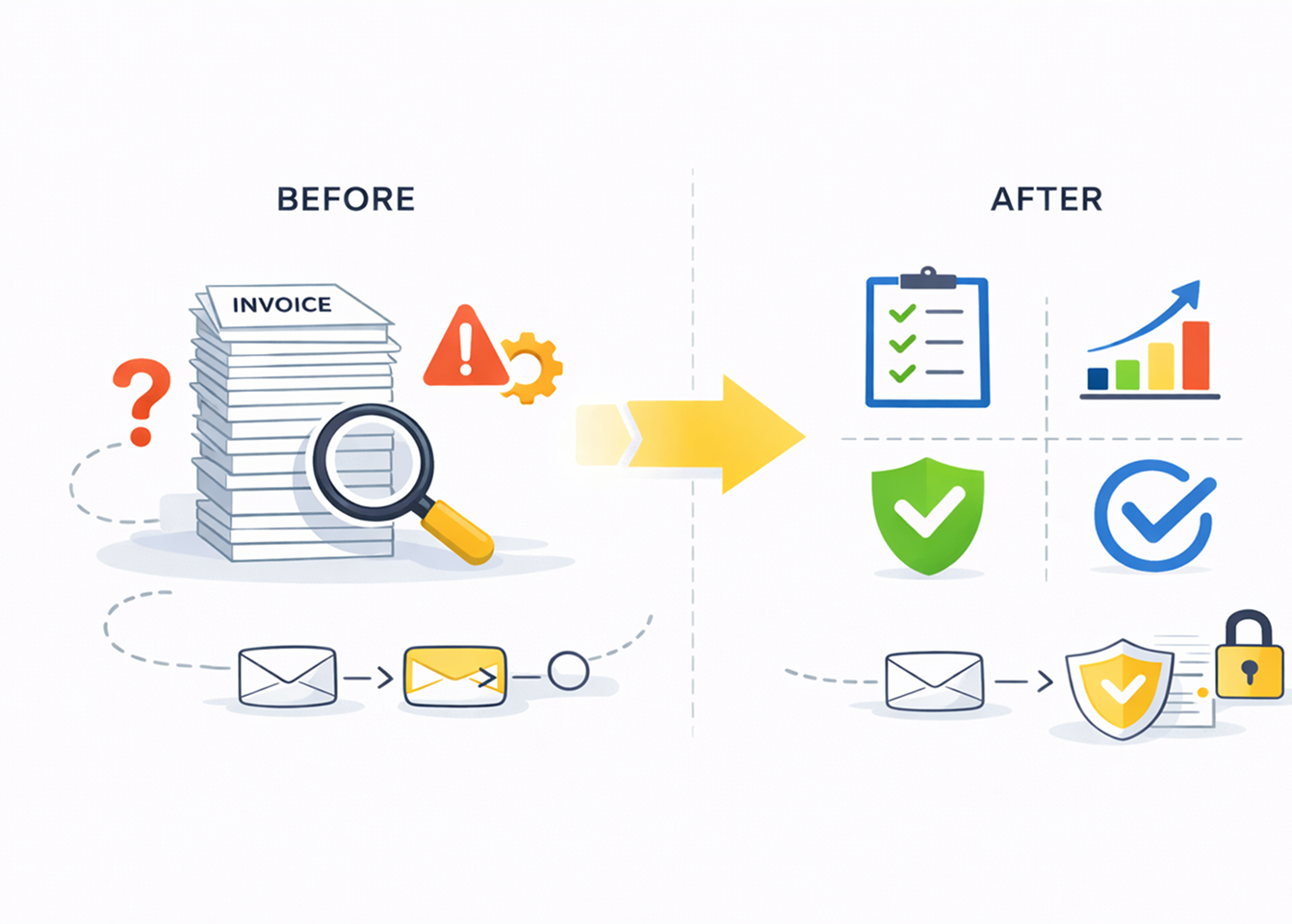
Before deployment, teams were spending time on repetitive handling, reconciliation, and exception chasing. After deployment, that work moved into a more governed workflow where invoice decisions were visible, traceable, and easier to control.
Finance teams were no longer buried inside the mechanics of invoice movement. They were positioned closer to where real value lives:

The most important shift was not just faster resolution. It was a change in how IT operations teams spent their time and how confidence in incident handling was established across the organization.
Before implementation, IT operations teams manually handled job failures, analyzed incidents, and executed resolution steps across fragmented systems. After deployment, incident handling became more structured and automated.
After deployment, the organization moved to a more integrated incident workflow where:
IT operations depend on reliable and timely incident resolution. Delays in handling Autosys job failures can cascade into downstream system disruptions, missed SLAs, and increased operational costs that compound across the enterprise.
The organizations that perform better are not just the ones that capture incidents. They are the ones that resolve those incidents quickly, consistently, and at scale — without growing the manual effort required to do so.
The Auto Incident Management Agent enables that shift — allowing IT operations teams to move from fragmented manual intervention to structured, automated resolution at the pace and volume that modern enterprise operations demand.